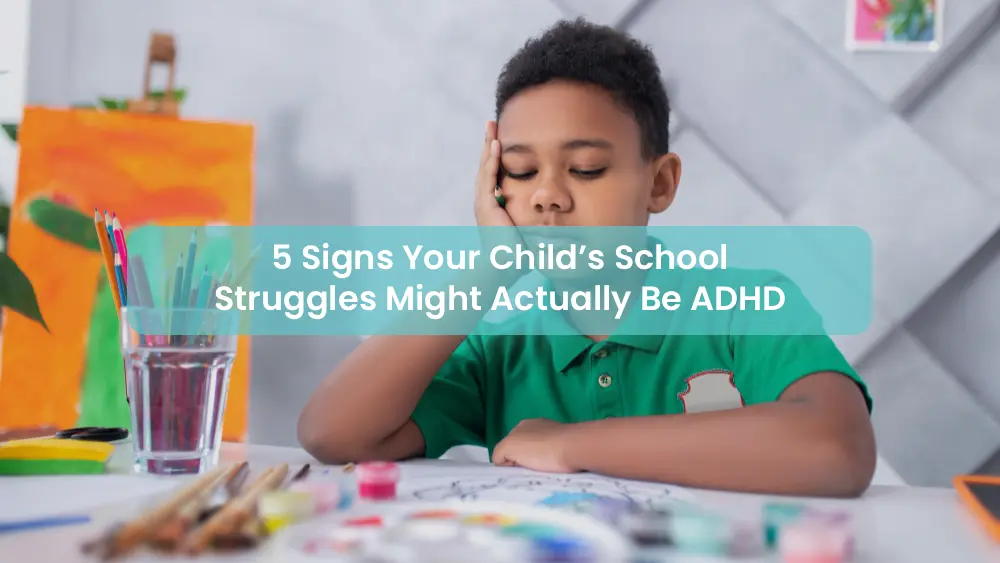
One. The missing homework and messy desk
One of the most common signs is a total lack of organization. This is not just a messy room. It is a pattern of losing things that are important. Your child might finish their science project but leave it on the kitchen table. They might lose their pencils and notebooks every week. This is a sign of a struggle with executive function.
This part of the brain acts like a manager. When the manager is not working well, the child cannot keep track of their tasks. If this sounds like your child, they might benefit from our specialized ADHD testing and TOVA services in Hagerstown. This testing helps us see how their brain processes information.
Two. Daydreaming and the mental fog
Not every child with ADHD is running around the room. Some children are very quiet but their minds are miles away. This is often called the inattentive type of ADHD. A teacher might report that your child is staring into space. They might miss instructions even when the teacher is looking right at them.
According to the Mayo Clinic, these children are often overlooked because they are not disruptive. However, they are still falling behind because they cannot stay connected to the lesson. If your child seems to live in a fog, it is a major red flag for ADHD.
Three. The need to move and the fidget factor
On the other side of the coin, some children simply cannot stay in their seat. You might notice they tap their feet, click their pen, or constantly ask to go to the bathroom. This movement is actually a way for them to try and focus. Their body needs to move so their brain can stay awake.
In a strict school setting, this behavior is often seen as being a troublemaker. It can lead to many notes home from the principal. If your child is always on the go, they may be dealing with the hyperactive side of the disorder. Our team can help you navigate this with professional ADHD treatment and support.
Four. Huge emotions and low frustration levels
School is hard work. When a child with ADHD hits a wall, they often have a meltdown. They might cry because they cannot find a pencil or get angry because a classmate looked at them the wrong way. These big feelings happen because the brain has a hard time regulating emotions.
The experts at SAMHSA note that emotional regulation is a key part of mental health in children. If your child seems to have more meltdowns than other kids their age, it is a sign they are overwhelmed. They are not being dramatic. They are truly struggling to handle the stress of the day.
Five. Trouble making and keeping friends
Social skills are a big part of school success. ADHD makes it hard to read social cues. Your child might talk too much or interrupt others. They might not realize when they are annoying a friend. Over time, other children might stop asking them to play.
This leads to a very lonely child. If you see your child struggling to fit in, it might be because their ADHD is making social rules hard to follow. Understanding these social gaps is a part of the care we provide at B.T Restoration and Healing Center.